
In today’s digital healthcare landscape, protecting patient data isn’t just good practice – it’s a legal requirement. Understanding and implementing GDPR compliance in medical administration can seem overwhelming, but with the right approach, it becomes a manageable and essential part of your practice’s operations.
Understanding GDPR in Healthcare
The General Data Protection Regulation (GDPR) plays a crucial role in protecting patient information. For medical practices, this means carefully handling everything from appointment schedules to medical records with the highest level of security and professionalism.
Key GDPR Requirements for Medical Practices
When handling patient information, several core principles must guide your processes:
Privacy by Design:
- Secure data collection methods
- Protected storage systems
- Controlled access protocols
- Regular security audits
- Documentation of processes
Maintaining these high standards of data protection while ensuring efficient practice operations can be challenging. Here at Emedsec, our virtual medical secretaries are trained in both GDPR compliance and efficient practice management, ensuring your patient data remains secure while your practice runs smoothly.
Practical Implementation Steps
Data Mapping and Assessment
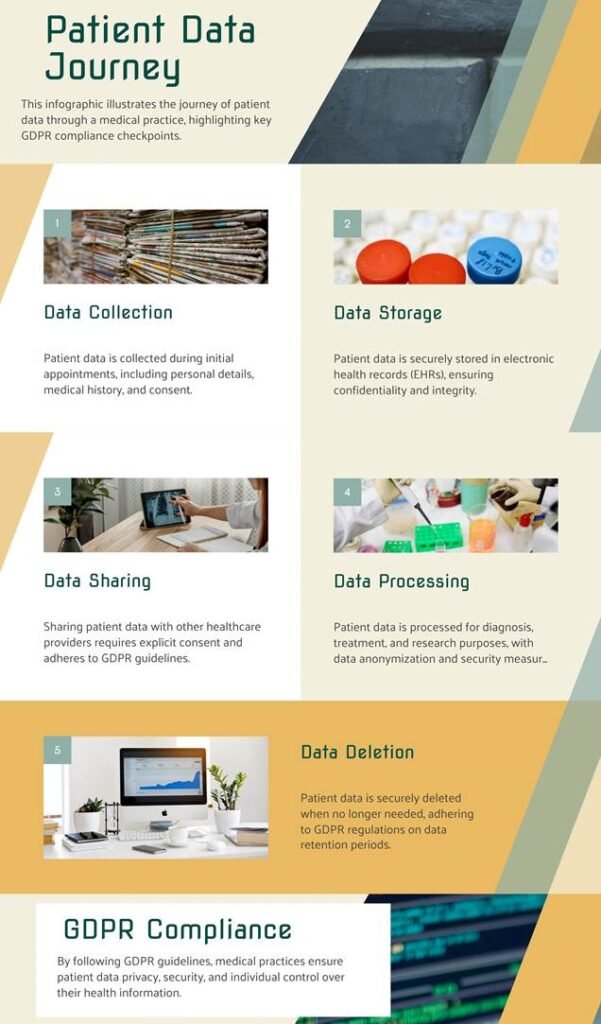
Understanding your data flow is essential for compliance:
- Patient information collection points
- Storage locations and methods
- Access permissions and controls
- Third-party data sharing
- Retention periods
Staff Training and Awareness
Your team needs to understand their role in maintaining GDPR compliance:
- Regular training sessions
- Clear procedural guidelines
- Incident reporting protocols
- Best practice updates
- Responsibility allocation
Digital Security Measures
Modern medical practices need robust digital security:
Essential Security Protocols
Creating a secure digital environment involves:
- Strong encryption standards
- Regular backup procedures
- Access control systems
- Audit trail maintenance
- Security testing protocols

Patient Rights Under GDPR
Understanding and respecting patient rights is fundamental:
- Access to personal data
- Right to data portability
- Consent management
- Information correction
- Data deletion requests
Common Compliance Challenges
Medical practices often face specific challenges:
- Balancing accessibility with security
- Managing legacy systems
- Coordinating with other providers
- Maintaining documentation
- Emergency access protocols
Best Practices for Ongoing Compliance
Maintaining GDPR compliance requires continuous attention:
- Regular audit schedules
- Updated documentation
- Staff refresher training
- System updates
- Process improvements
Managing Patient Consent
Proper consent management is crucial:
- Clear consent forms
- Regular consent reviews
- Withdrawal procedures
- Special category data
- Third-party sharing
Data Breach Prevention
Preventing data breaches requires proactive measures:
- Risk assessment protocols
- Regular system checks
- Staff vigilance training
- Incident response plans
- Recovery procedures
Record Keeping Requirements
Maintaining proper records is essential for compliance:
- Processing activities
- Consent records
- Security measures
- Staff training
- Incident reports
Comprehensive GDPR compliance support is available for you at Emedsec, and you’re just one call away from experiencing excellence in medical administration. Our virtual secretarial services ensure your practice maintains the highest standards of data protection while operating efficiently and professionally.