
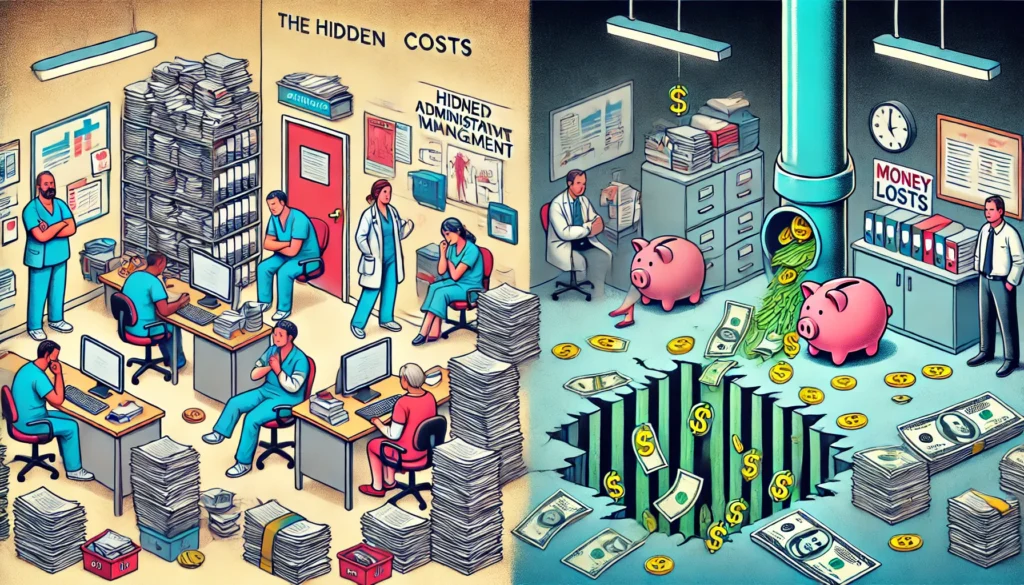
Running a successful private medical practice requires more than just excellent clinical skills. While most practitioners focus on delivering outstanding patient care, the administrative backbone of the practice often receives less attention. Yet, poor administrative management can silently drain your practice’s resources and impact your bottom line in ways you might not expect.
Understanding the Impact of Administrative Inefficiency
Think of your practice’s administration like the foundation of a house – when it’s solid, everything above runs smoothly. But when cracks appear, the entire structure becomes vulnerable. In today’s fast-paced healthcare environment, these administrative weaknesses can quickly escalate into significant financial and operational challenges.
The Financial Drain of Administrative Inefficiencies
Poor administrative management affects your practice in multiple ways, often creating a cascade of hidden costs that accumulate over time:
Direct Financial Impact:
- Missed or delayed billing opportunities
- Insurance claim rejections
- Appointment scheduling gaps
- Inventory mismanagement
- Inefficient resource allocation
Beyond these immediate financial impacts, the ripple effects of administrative inefficiency extend much further. Consider how much time your clinical staff spends managing paperwork instead of patients, or how many potential new patients you might lose due to poor communication systems.

Time: Your Most Valuable Asset
In the medical field, time truly equals money, but it’s also directly linked to quality of care. When administrative tasks aren’t streamlined, everyone in the practice feels the pressure:
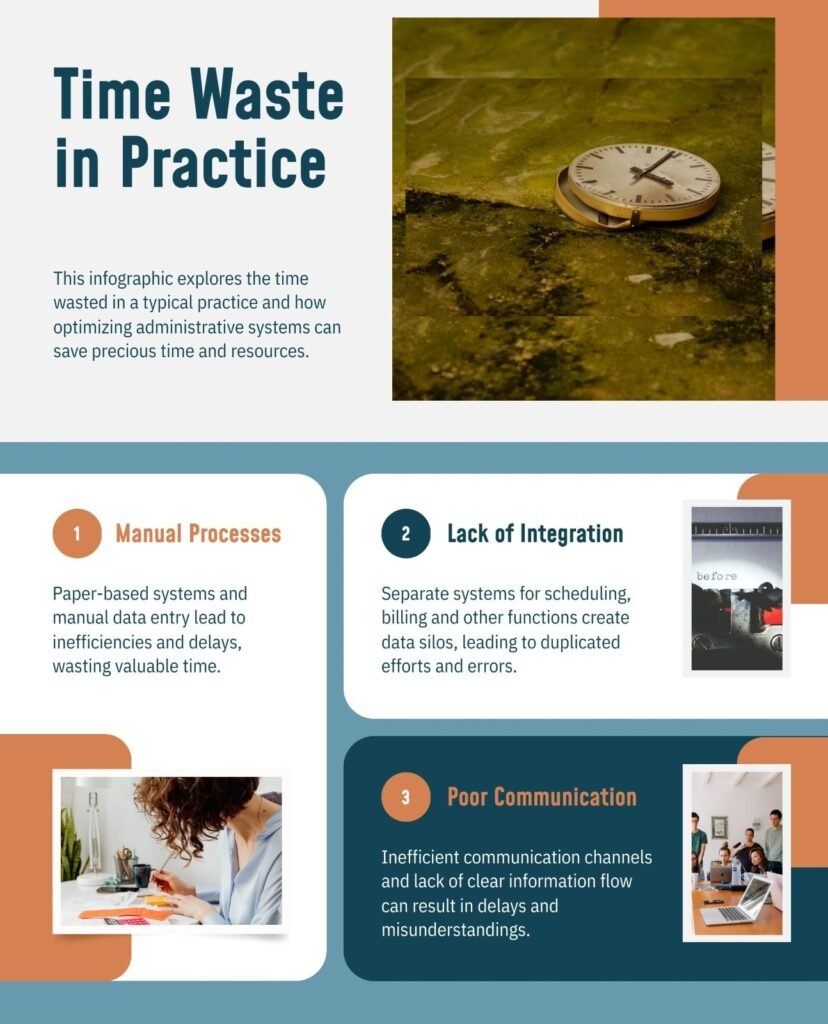
A typical day in an inefficiently managed practice often involves:
- Doctors spending precious time on paperwork rather than patient care
- Staff scrambling to locate missing information
- Multiple follow-ups for simple administrative tasks
- Delayed responses to patient queries
- Redundant data entry across different systems
The Solution: Virtual Medical Secretarial Services
Modern solutions like virtual medical secretaries can transform your practice’s efficiency. These professionals work remotely to handle various administrative tasks, allowing your in-house team to focus on what they do best – caring for patients.
Technology Integration: A Critical Investment
Many practitioners hesitate to invest in practice management software, viewing it as an unnecessary expense. However, the cost of not having proper systems in place often exceeds the investment in good technology:
Consider how integrated practice management software can:
- Automate routine administrative tasks
- Reduce human error in scheduling and billing
- Improve patient communication
- Streamline document management
- Provide valuable practice insights
The Patient Experience Factor
Poor administration doesn’t just affect your bottom line – it impacts patient satisfaction and retention. When patients encounter disorganized scheduling, billing errors, or communication delays, they’re more likely to seek care elsewhere.
Building Patient Trust Through Efficiency
Efficient administrative management helps build and maintain patient trust by:
- Ensuring timely responses to inquiries
- Maintaining accurate medical records
- Providing smooth appointment scheduling
- Managing follow-ups effectively
- Handling billing transparently
Digital Presence and Practice Growth
In today’s digital age, your practice’s online presence is crucial for growth. Poor administrative management often leads to neglected social media accounts and outdated online information, potentially losing you new patients.
Taking Action: Strategic Solutions
Implementing effective administrative management doesn’t have to be overwhelming. Start by:
- Assessing your current administrative pain points
- Identifying tasks that could be delegated to virtual staff
- Evaluating practice management software options
- Creating clear communication protocols
- Establishing performance metrics
The Return on Investment
While investing in proper administrative management requires initial resources, the returns are substantial:
- Increased revenue through better billing practices
- More time for patient care
- Improved staff satisfaction
- Enhanced patient experience
- Sustainable practice growth
Remember, strong administrative management isn’t just about keeping things organized – it’s about creating a foundation for practice success and growth.